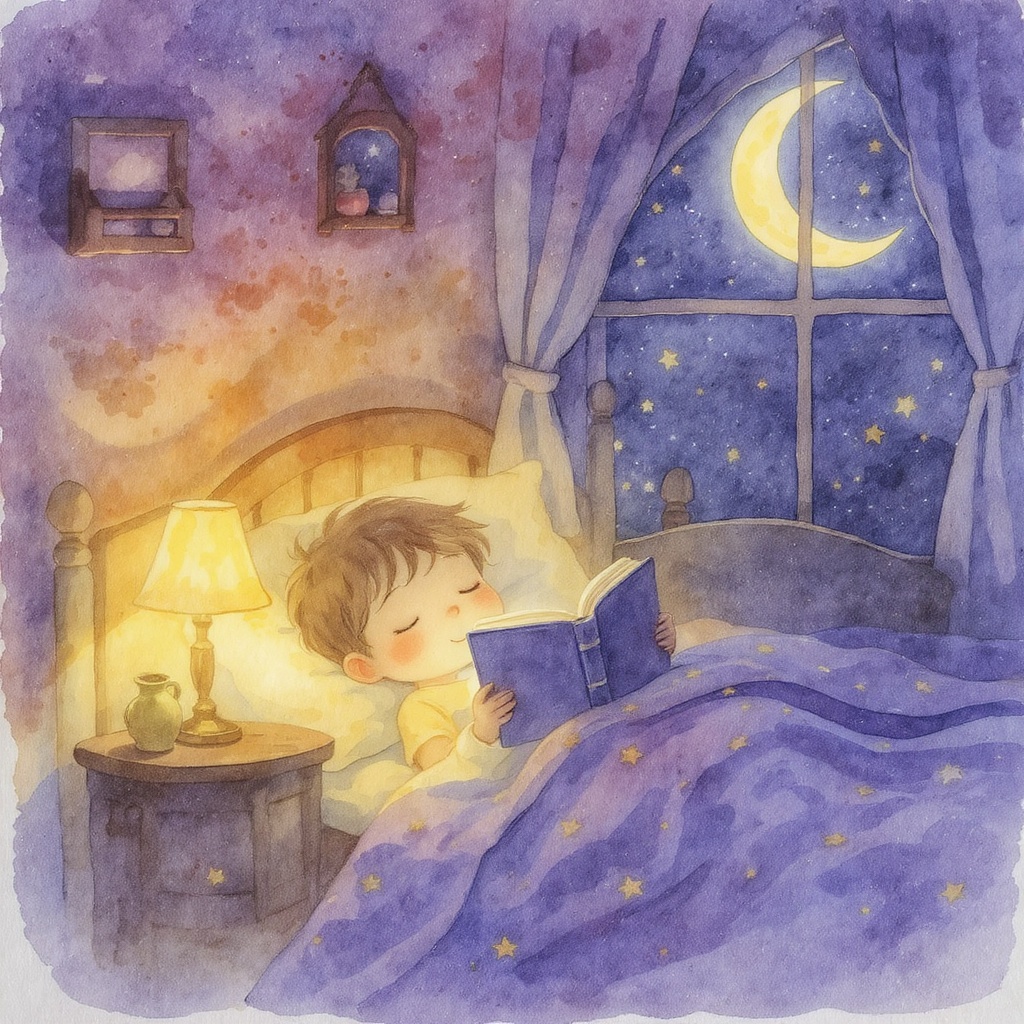
If you've ever faced a toddler who absolutely refuses to sleep, you're not alone. The bedtime struggle is real. One powerful tool in your arsenal? The right bedtime story. Not just any story — but themes specifically designed to calm, soothe, and ease toddlers into rest mode.
Here are 10 bedtime story ideas for toddlers who won't sleep, backed by what actually works at ages 2-4.
1. "Animals Going to Bed" Stories
Toddlers love animals, and watching characters they adore settle down for the night normalizes sleep as something everyone does.
Why it works: These stories create a gentle social cue. If the bunny, the bear, and the dolphin all go to sleep, maybe your toddler will too. The repetitive structure ("Goodnight, Bunny. Goodnight, Bear.") is hypnotic and calming.
Pro tip: Choose stories where each animal completes a simple bedtime ritual (brush teeth, snuggle a blanket, close eyes). Your toddler will start associating these actions with sleep.
Looking for a collection with lovable animal characters? Our Quaint Collection features gentle tales with Baby Turtle, Mr. Dolphin, and Bunny-Rabbit — perfect for this age group.
2. Counting or Number-Based Stories
Stories that count down ("10 little stars fading away... 9 little stars...") or count up to a sleepy ending combine learning with relaxation.
Why it works: The predictable pattern is soothing. Toddlers know what comes next, which reduces anxiety. Plus, the rhythmic counting mimics the slow breathing you want to encourage before sleep.
Avoid: Stories that count UP with increasing energy. You want the narrative to wind down, not build momentum.
3. "Goodnight" Rituals
These stories say goodnight to everything in the room or the world: "Goodnight moon, goodnight stars, goodnight toys, goodnight door."
Why it works: It's meditative and helps toddlers mentally "close" their day. Each "goodnight" is a mini-release, letting go of the day's stimulation. The repetition creates a lullaby effect.
Interactive element: After reading, let your toddler say goodnight to their own room. "Goodnight, teddy bear. Goodnight, nightlight." It extends the calming ritual beyond the book.
4. Dreamy Adventure Stories
Gentle adventures where characters float on clouds, sail on moonbeams, or explore soft, quiet places like enchanted forests or underwater kingdoms.
Why it works: These stories engage imagination without overstimulating. The key is pacing — slow, dreamy, with lots of descriptive, soothing language ("soft breeze," "gentle waves," "twinkling lights").
Caution: Avoid high-stakes or scary elements. No villains, no danger. Just exploration and wonder.
5. Repetitive Phrase Stories
Books with a repeating refrain that appears on every page or every few pages: "Time for bed, little one" or "Close your eyes, drift away."
Why it works: The repetition acts like a mantra. Your toddler starts to anticipate the phrase, and it becomes a comforting anchor throughout the story. The predictability reduces cognitive load, making it easier to relax.
Bonus: You can adapt the refrain to your own bedtime routine. "Time for bed, [child's name]" becomes part of your nightly script.
6. Bedtime Problem-Solving Stories
Characters who don't want to sleep but eventually discover why bedtime is cozy, safe, and good.
Why it works: Toddlers see themselves in the resistant character. When that character finds comfort in sleep, your child absorbs the lesson indirectly. It validates their feelings ("I don't want to sleep either!") while gently guiding them toward acceptance.
Best approach: Choose stories where the character discovers sleep is actually nice — not stories where they're forced or tricked into it.
7. Nature and Seasons Stories
Stories about the sun setting, flowers closing at night, or the world quieting down as evening comes.
Why it works: These stories connect sleep to natural rhythms. "Everything sleeps" becomes a universal truth, not a battle. The imagery of sunsets, twilight, and nighttime is inherently calming.
Sensory language: Look for books that describe the coolness of evening air, the softness of moonlight, or the quietness of night. Sensory details help toddlers physically relax.
8. Family and Togetherness Stories
Narratives about families tucking in, saying "I love you," and feeling safe together.
Why it works: Bedtime can trigger separation anxiety in toddlers. Stories that emphasize connection and safety ease this fear. Your child learns: "Mom and Dad are here, I'm loved, I'm safe — I can let go and sleep."
After reading: Mirror the story. Say your own version of "I love you," "You're safe," or "I'll be right here." It reinforces the emotional security the story built.
9. Quiet Activity Stories
Characters doing calm activities like sipping warm milk, taking a bath, or snuggling with a favorite toy.
Why it works: These stories model relaxation. Toddlers learn that quiet, gentle activities are pleasant and lead to sleep. The lack of action or excitement keeps energy levels low.
Real-world bridge: After the story, offer a similar quiet activity. A sip of water, a gentle back rub, or holding a stuffed animal extends the calm from the page into the room.
10. Rhyming and Rhythmic Stories
Books with strong rhyme schemes and musical language create an almost song-like experience.
Why it works: Rhythm and rhyme are hypnotic. They mimic the cadence of lullabies, which have been soothing babies to sleep for centuries. The predictable flow helps toddlers' brains shift into rest mode.
Reading tip: Read slowly, emphasizing the rhythm. Let your voice become softer and slower as the story progresses. You're using the text as a lullaby, not just a story.
How to Use These Story Ideas Tonight
Pick one theme that resonates with your toddler's personality or current challenges. If separation anxiety is the issue, try family togetherness stories. If they're just wired and energetic, go for counting or repetitive phrase books.
Build consistency: Use the same story or theme for a week. Familiarity enhances the calming effect. Once your toddler knows what's coming, the story itself becomes a sleep cue.
Set the mood: Dim lights, lower your voice, and eliminate distractions before you start reading. The story is just one part of the wind-down process — the environment matters too.
Stay patient: If your toddler still resists after the story, that's normal. Bedtime stories aren't magic wands, but they're powerful tools. Combined with a consistent routine and calm parenting, they make a real difference over time.
What If None of These Work?
Some toddlers need more than a story. If bedtime battles persist, consider:
- Earlier bedtime: Overtired toddlers resist sleep harder. Try moving bedtime up by 15-30 minutes.
- Physical activity earlier in the day: Ensure your toddler gets enough movement and outdoor time so they're naturally tired by evening.
- Consistent routine: The story should be part of a predictable sequence. Bath, pajamas, story, cuddles, lights out — same order every night.
- Rule out discomfort: Check for room temperature, uncomfortable pajamas, hunger, or thirst. Physical comfort is foundational.
The Real Goal: Connection Over Perfection
The best bedtime story isn't the one that knocks your toddler out in five minutes. It's the one that creates connection, calm, and a sense of safety. Some nights will be smooth. Others won't. That's parenting.
What matters is showing up consistently, offering comfort through story, and reinforcing the message: "It's okay to let go. Sleep is safe. I'm here."
Over time, these 10 bedtime story ideas can become part of a toolkit that transforms bedtime from a battleground into a cherished ritual. And when you finally hear those soft, steady breaths? That's the sweetest sound of all.
Ready to build your bedtime story library? Explore our full collection of calming tales designed to help toddlers — and parents — rest easier.