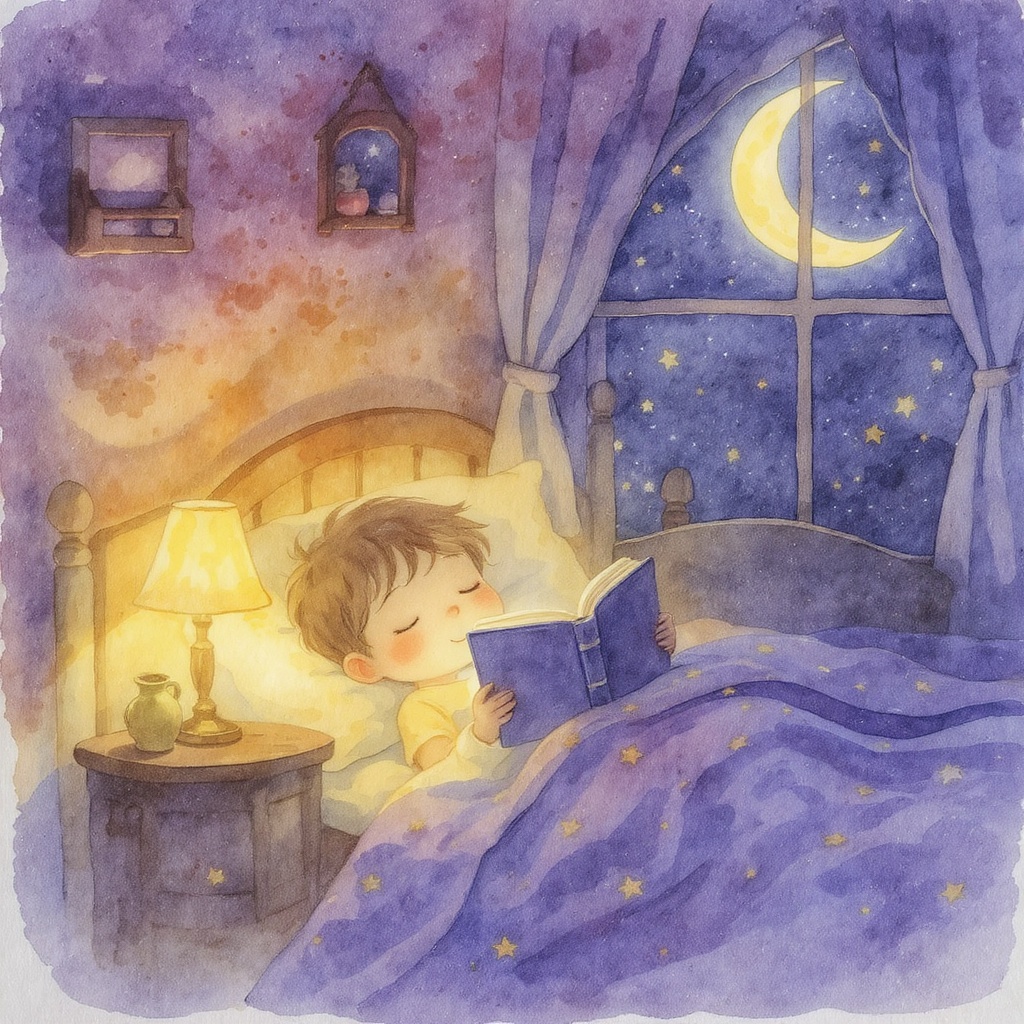
There's no shortage of children's books. What's harder to find is the right book for tonight — one that matches where your child actually is developmentally, not just the age printed on the back of the package.
Age-appropriate story selection isn't about being rigid. It's about knowing what your child's brain is ready for — what will feel comforting, what will hold their attention, and what will send them toward sleep instead of winding them up. Get it right and bedtime becomes easy. Get it wrong and you're answering questions about dinosaur blood for 45 minutes.
Here's a practical breakdown by age group.
Why Age Matters More Than You Think
Children don't just have different attention spans — they have fundamentally different cognitive and emotional needs at each stage. A story that's too simple feels boring; too complex creates anxiety or excitement that fights sleep. The right match, though, hits the sweet spot: engaged enough to focus, calm enough to drift off.
This isn't about your child being "advanced" or "behind." It's about the kind of narrative their brain is wired to process at each stage. Understanding this changes how you shop for books and how you use them at night.
If you're still building your bedtime routine from scratch, these five tips for a better bedtime routine are worth reading first — story selection works best inside a consistent structure.
Ages 2–3: Rhythm, Repetition, and Simple Wonder
Toddlers are not small adults. Their working memory is limited, their attention span is measured in minutes, and they find genuine pleasure in hearing the same story fifty times in a row. This is not a sign of boredom — repetition is how toddlers learn, and familiar stories feel safe.
What works at this age:
- Short, simple narratives. One character, one journey, one resolution. Bedtime Bear goes to sleep. The little star finds its place in the sky. No subplots.
- Rhyme and rhythm. Toddler brains are wired for sound patterns. Rhyming text is easier to process and genuinely soothing — the predictability of a rhyme is a small comfort.
- Big, clear illustrations. Toddlers read pictures as much as they listen to words. Bold, simple images with expressive faces keep them anchored.
- Themes of comfort and safety. Animals going to bed, families saying goodnight, gentle nighttime scenes. This age group is still building their sense that the world is safe — stories should reinforce that.
- Repetitive phrases. "Goodnight stars. Goodnight air. Goodnight noises everywhere." The repetition signals: this is almost over, now we sleep.
What to avoid: Anything with a scary conflict, unresolved tension, or too many characters. Even mild peril can linger in a toddler's mind and delay sleep.
A book worth having at this stage: KidsBedTimeStories: A Quaint Collection is designed exactly for this window — ages 2 to 6, with gentle pacing and illustrations that invite sleepiness rather than stimulation. It belongs in any toddler's bedtime rotation.
Ages 4–5: Story Logic and Big Feelings
Preschoolers have made a significant cognitive leap. They can follow a story with a beginning, middle, and end. They understand cause and effect. They care about characters and will ask, "But why did he do that?" mid-page. This is a beautiful window — they're engaged enough to love a real story, but still young enough that simpler is usually better.
What works at this age:
- Clear character goals. The rabbit wants to find a friend. The little owl is scared of the dark and has to face it. Four-year-olds understand wanting something and working toward it.
- Emotional themes they're navigating. Starting school, making new friends, feeling left out, being scared at night. Stories that mirror real experiences give this age a framework for their own feelings.
- Gentle humor. Preschoolers love things that are a little silly. A clumsy elephant or a bear who can't find his hat is funny without being overstimulating.
- Satisfying resolutions. Everything wrapped up, everyone okay, the problem solved. Ambiguity is too much for this age at bedtime — they need a clean ending.
- Slightly longer books. A 32-48 page picture book is manageable now. Some nights you can even read two shorter ones.
What to avoid: Cliffhangers, stories about death or serious loss (unless you're intentionally using a book as a therapeutic tool), and anything with imagery that could become scary in the dark (vivid monsters, even friendly ones, can shift in a child's mind after lights out).
The brain science behind why stories hit differently at night — and why they're better than screens — is worth understanding. The science behind bedtime reading explains what's happening neurologically when you read to a preschooler at bedtime.
Ages 6–8: Real Adventure, Real Stakes
Early readers can handle — and want — more. By six, most children have developed what psychologists call "narrative comprehension": the ability to hold a complex story in mind, track multiple characters, and understand that a character's choices have consequences. This is when chapter books become possible. When mysteries start to engage them. When a story can be genuinely exciting without preventing sleep.
What works at this age:
- Chapter books read in installments. One or two chapters a night creates natural stopping points and builds anticipation. The "I need to know what happens!" feeling, channeled well, makes kids actually look forward to bedtime.
- Interesting characters with personality. Six-year-olds care about characters. A protagonist with quirks, strengths, and flaws is far more compelling than a perfect hero.
- Mild mystery and problem-solving. Who stole the thing? How will they escape? What's behind the door? At this age, the intellectual puzzle is engaging without necessarily triggering anxiety — as long as it resolves.
- Humor and wit. Older kids appreciate wordplay, situational comedy, and characters who are knowingly funny. A sarcastic sidekick lands now.
- Some moral complexity. Not everything needs to have an obvious lesson, but stories where good choices matter and bad choices have consequences resonate at this age.
What to avoid: Pure horror or genuinely disturbing content. Sustained violence or graphic scenes. And screen-based reading substitutes — even e-readers disrupt melatonin production in ways that printed books don't.
A standout for this age group: Under the Bone: A Sassy Pet Detective Adventure (ages 6–10) hits every note for this window — an engaging mystery, a protagonist with real personality, and a plot kids will actually want to hear "one more chapter" of. It's the kind of book that makes an 8-year-old request bedtime.
The Rule That Spans Every Age
Whatever the book, the delivery matters as much as the content. Read slowly. Use different voices for different characters. Pause at a tense moment. Let your child interrupt with questions — that's not disrupting the story, that's engagement.
And repeat favorites without guilt. A toddler asking for the same book for the twentieth time is having an experience that's genuinely good for their development. An 8-year-old who wants to re-read a beloved chapter book is building a relationship with a story, which is something readers remember for life.
If you want to go deeper on making the actual reading practice stick, building a bedtime story routine your kids will love walks through the mechanics of turning this into a consistent family habit.
✨ Join the Library of Dreams
Once you know what your child is ready for, having a deep library of the right stories on hand makes everything easier. ✨ Join the Library of Dreams for just $4.99/month — access our full collection of age-sorted bedtime stories, plus personalized stories where your child is the hero. It's less than a dollar a week for a better bedtime, every night.