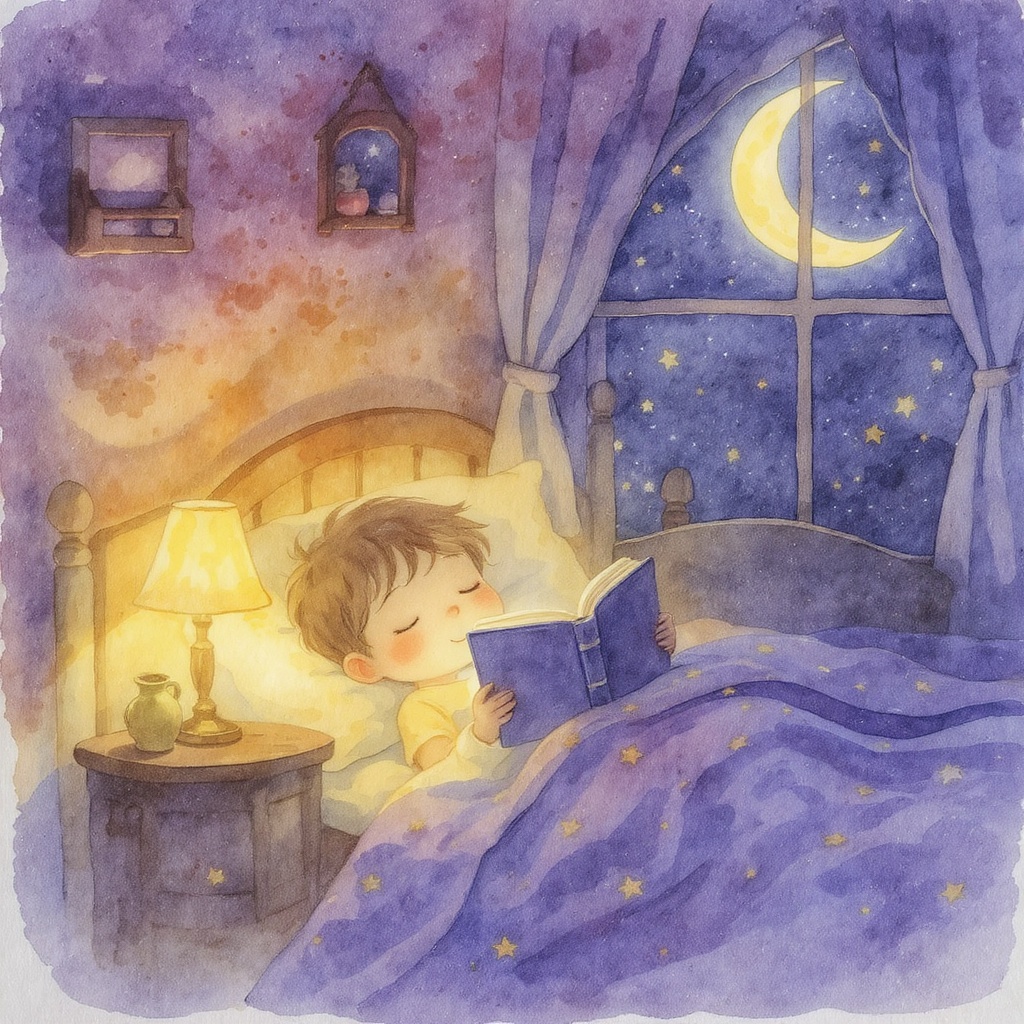
There is a phrase children say that parents secretly love: “Read it again.”
Not “I liked that.” Not “That was good.” Just: again. Because a story that works doesn’t end when the last page turns — it echoes. It settles somewhere behind the eyes, and the only way to catch it again is to go back to the beginning and start over.
If you’ve read aloud to a child at bedtime, you already know this feeling. What you might not know is how much it’s doing for them — and for you.
What Happens in Their Brain
When you read aloud to a child, you’re doing something that screens, podcasts, and even audiobooks can’t replicate: you’re combining a familiar, trusted voice with language. Researchers at Cincinnati Children’s Hospital found that reading aloud activates regions of the brain associated with language, imagery, and comprehension in ways that listening to a recording simply doesn’t. The difference isn’t the story — it’s the voice.
Your child already knows your voice. They’ve been listening to it since before they were born. When that voice becomes the vehicle for a story, something clicks into place: language feels safe, imagination feels encouraged, and the brain is primed to absorb.
By age five, a child who has been read to regularly has heard tens of millions more words than a child who hasn’t. That vocabulary gap shows up in school and follows children for years. Bedtime reading isn’t extra — it’s foundational.
Why Repetition is a Feature, Not a Bug
Back to “read it again.”
When a child asks to hear a story they’ve already heard, many parents assume they’re being lazy or avoiding sleep. The opposite is true. Repetition is how children learn. Each time through the same story, the child catches something new — a word, a pattern, a detail they missed. They’re also building narrative comprehension: learning that stories have structure, that problems get solved, that the ending is always coming.
There’s something else, too. Predictability is comforting. The world outside the bedroom window is big and complicated. A story they already know will end safely is a kind of promise — and children are very good at needing promises.
Looking for a simple, effective bedtime routine to pair with your reading time? 5 Simple Bedtime Routine Tips That Actually Work makes evenings smoother so story time can stay sacred.
You Don’t Have to Be Perfect
This is worth saying plainly: your child doesn’t need a great reading voice. They need your reading voice.
The stumbled word, the silly sound effect you didn’t plan, the drowsy slowdown in the last two pages — none of it diminishes the experience. It’s part of it. Reading aloud is an act of attention. You are there, in the room, choosing to give your time to this child. They know it. Their bodies know it.
Some of the most powerful bedtime memories children carry into adulthood aren’t about great stories. They’re about the smell of the room, the weight of the blanket, and a voice that made the world feel like it could be trusted.
A Story for Every Night
If you’re looking for the right story to start with — or to keep going — I write one every week for families just like yours. Warm, whimsical, built for bedtime.
🕮 KidsBedTimeStories: A Quaint Collection — Ages 2–6. Four baby animal characters, gentle watercolor adventures, perfect for the very young.
🐈 Under the Bone: A Sassy Pet Detective Adventure — Ages 6–10. Mystery, Manhattan, and a very smart Pomeranian detective.
Want to meet the Pomeranian behind the mysteries? Read about the characters behind these stories here.
And if you want a new story every single week:
✨ Join the Library of Dreams — $4.99/month — New bedtime stories curated for ages 2–8, delivered straight to your family.
Warm regards,
Iannie Auramie
KidsBedTimeStories.org