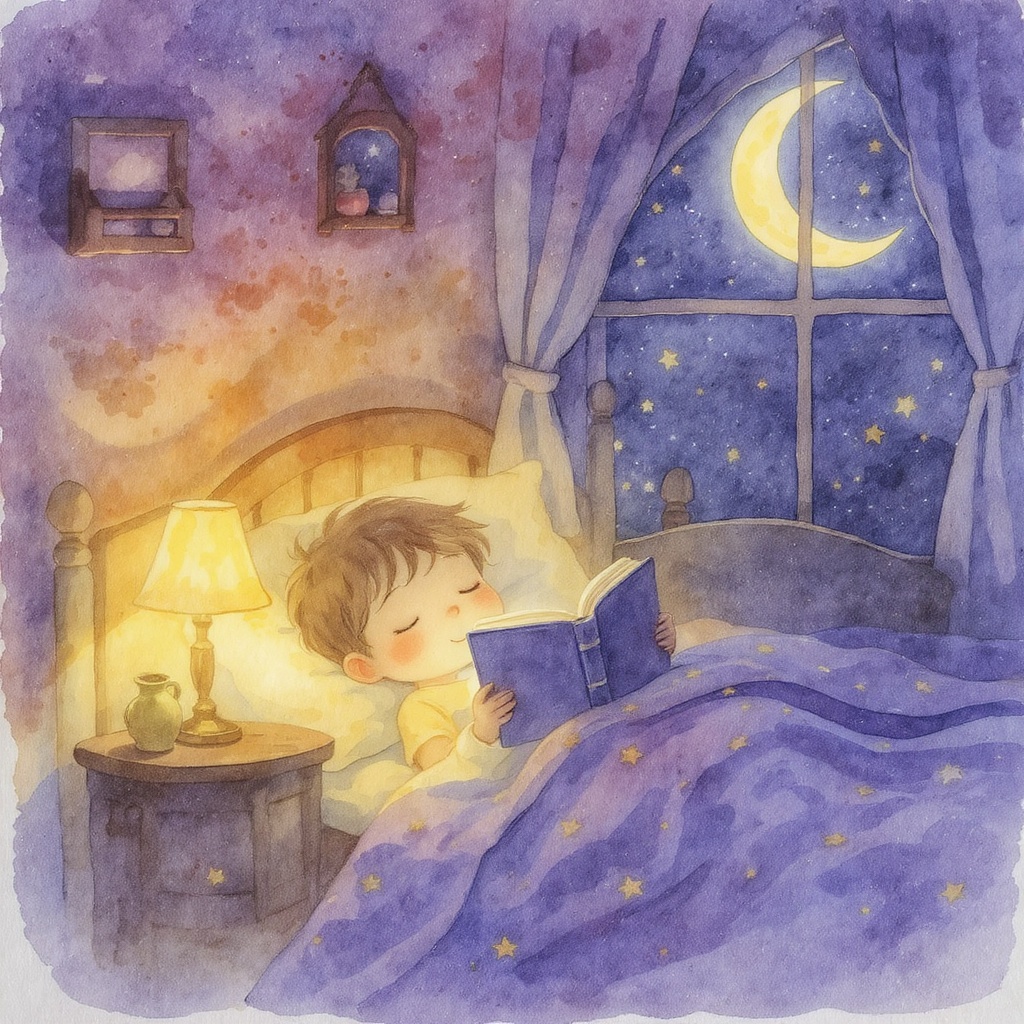
My daughter used to fight bedtime like it was a professional sport. Stalling, water requests, the sudden urgent need to discuss every dinosaur she'd ever learned about. Then we started a reading ritual — same chair, same lamp, same gentle voice — and something shifted. She started asking for it. Not just tolerating it: asking.
I assumed it was just a comfort thing. Then I started reading the sleep research, and it turns out there's a lot more happening in that quiet half-hour than I realized.
What Your Child's Brain Is Doing at Bedtime
About two hours before sleep, the brain begins releasing melatonin — the hormone that signals the body to wind down. But melatonin is a shy hormone. It doesn't show up when screens are glowing, notifications are pinging, or the environment feels stimulating. It needs the right conditions: dim light, low noise, a sense of safety.
A bedtime reading ritual delivers exactly that. The steady rhythm of a parent's voice, the predictable structure of a story, the warm physical closeness — these cues tell the nervous system that the day is over and it's safe to let go. Research published in Pediatrics has shown that consistent pre-sleep routines reduce nighttime waking and help children fall asleep faster. The routine itself becomes a sleep cue.
Screens Do the Opposite
This is where the science gets really clear, and a little uncomfortable for most of us. The blue light emitted by tablets, phones, and televisions actively suppresses melatonin production — in some studies, by more than 50%. A child who watches 30 minutes of screen content before bed isn't just stimulated; they're biologically delayed. Their brain has been told it's still afternoon.
A book does the opposite. The warm, low light of a bedside lamp doesn't disrupt melatonin. The passive experience of listening to a story (rather than interacting with a game or video) allows the brain to gradually decelerate. Eyes get heavy. Breathing slows. That's not magic — that's melatonin doing its job without interference.
If you're looking for ways to structure this transition away from screens, 5 Calming Bedtime Routines That Actually Work has some practical approaches that pair well with reading.
The Bonding Chemistry Nobody Talks About
Here's the part that surprised me most. When a parent reads aloud to a child — close together, making eye contact, sharing a story — both people's brains release oxytocin. You've probably heard it called the "bonding hormone," but it has a sleep function too: oxytocin reduces cortisol (the stress hormone), and lower cortisol means a calmer, more sleep-ready nervous system.
In other words, reading together isn't just sweet. It's a co-regulated stress reduction system. Your calm voice literally helps your child's body calm down. The story is the vehicle; the connection is the medicine.
Children who feel securely attached to their parents at bedtime — not anxious, not unsettled — fall asleep faster and stay asleep longer. Bedtime reading is one of the most efficient ways to create that feeling of safety in the 20 minutes before lights-out.
The Cognitive Bonus (Because Why Not)
We're here to talk about sleep, but it's worth mentioning: the same reading session that helps your child sleep is also building vocabulary, narrative comprehension, and listening skills at a rate that independent reading can't match at young ages. A study from Ohio State University estimated that children who are read to daily hear approximately 1.4 million more words by age 5 than children who are rarely read to.
Sleep and learning are deeply linked — the brain consolidates what it learned during the day during sleep. So a bedtime story isn't just helping your child wind down; it's giving their sleeping brain better material to work with.
Making the Ritual Stick
The research is fairly consistent on what makes a bedtime reading routine effective:
- Same time, every night. Predictability matters more than perfection. Even 15 minutes at the same time reinforces the sleep cue.
- Same cozy spot. Physical environment cues the nervous system. The reading chair becomes a signal.
- Let them choose (sometimes). Ownership increases investment. A child who picked the story is a child who wants to hear it.
- No rushing. The unhurried quality of the ritual is part of what makes it work. Glancing at your phone cancels the oxytocin.
For more on building a routine that actually holds together over time, How to Build a Bedtime Story Routine Your Kids Will Love goes deeper on the structure side.
The Stories That Help Most
Not all bedtime stories are equal for sleep. The best ones for wind-down have a gentle pace, a satisfying resolution, and a tone that mirrors where you want the child's nervous system to go: calm, safe, settled. Adventure is fine; high-stakes cliffhangers, not ideal. Think of the story as the last emotional input before sleep — make it a good one.
For younger readers (ages 2–6), our book KidsBedTimeStories: A Quaint Collection was written specifically with this wind-down rhythm in mind — short, warm stories with cozy resolution that make falling asleep feel like the natural ending to the tale.
For older readers (ages 6–10) who need something with a bit more narrative pull, Under the Bone: A Sassy Pet Detective Adventure offers mystery and gentle humor without the cortisol-spiking tension of scarier fare.
If you want help matching the right kind of story to your child's age and temperament, 5 Tips for a Better Bedtime Routine covers the selection piece alongside the broader ritual.
One Last Thing
The research is real, but so is the thing that happens when you close the book and your child is already asleep, mouth slightly open, completely at peace. That's not just a good night — that's a small, repeatable miracle you built into your evening. Worth protecting.
If you want more story support, we send weekly bedtime stories directly to your inbox — curated, age-appropriate, ready to read aloud the moment your child climbs into bed.
✨ Join the Library of Dreams
A new bedtime story in your inbox every week — $4.99/month.
Subscribe Now