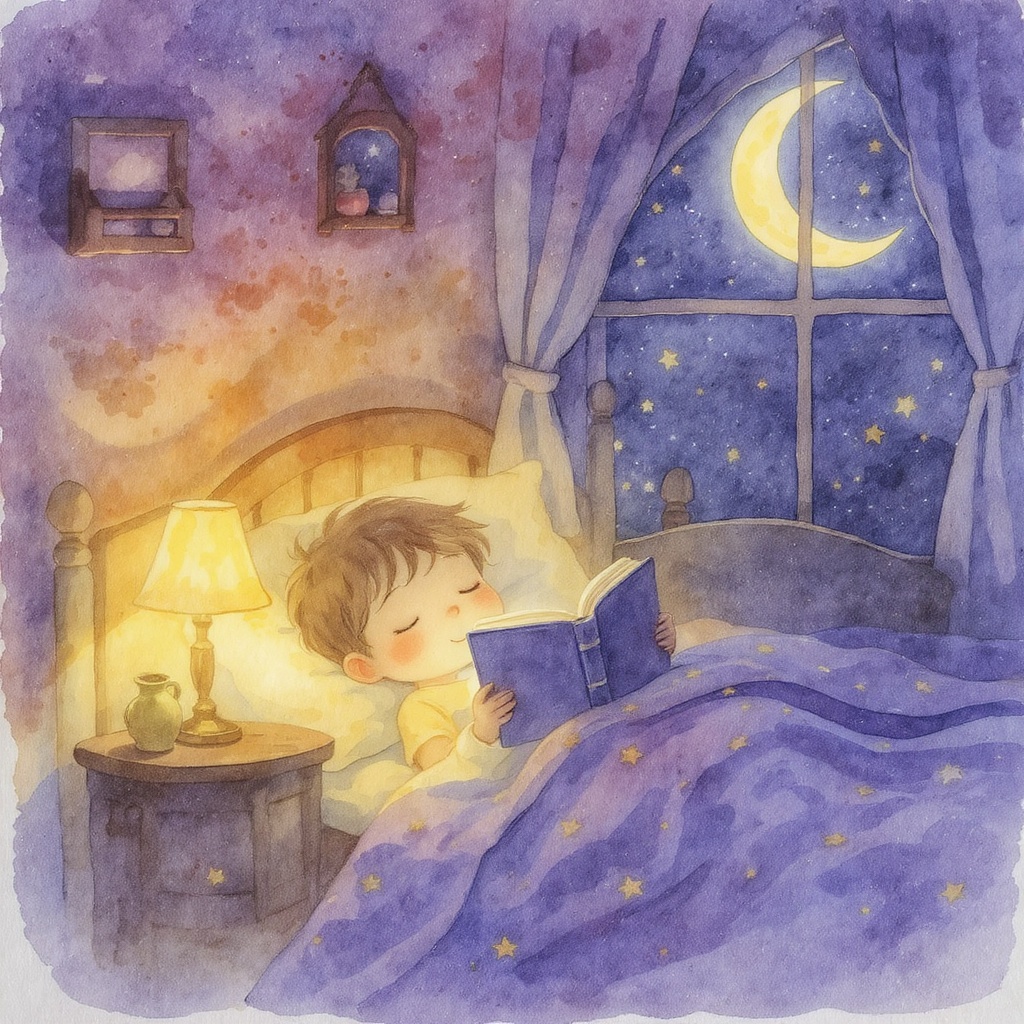
Why Reading Aloud Before Bed Changes Your Child's Brain
Every night, when you open a book and begin to read aloud, something extraordinary happens — not just in the story, but inside your child's brain. Science has caught up with what parents have always sensed: bedtime reading is not just sweet tradition. It is one of the most powerful developmental tools you have.
Here is what the research tells us — and why it matters more than most parents realize.
Neural Pathways Built Word by Word
When a child hears language — especially spoken narrative — multiple regions of the brain activate simultaneously. Neuroimaging studies from Cincinnati Children's Hospital found that children who were read to regularly showed significantly greater activation in areas associated with language processing, visual imagery, and narrative comprehension compared to children with limited reading exposure.
These aren't just abstract benefits. Every story you read aloud is literally wiring your child's brain to process complex information, build cause-and-effect thinking, and hold longer sequences of events in working memory. You're not reading to them — you're building the architecture they'll use to think for the rest of their lives.
The bedtime window matters specifically because the brain consolidates learning during sleep. Stories heard before sleep are more likely to be encoded into long-term memory. That means the vocabulary, concepts, and emotional scenarios from tonight's book may be more firmly embedded by morning.
Vocabulary That Classroom Instruction Cannot Match
Here is a fact that should stop every parent: children's books contain 50% more rare words than prime-time adult television. When you read aloud, your child is exposed to sophisticated vocabulary they would rarely encounter in everyday conversation.
Vocabulary gaps widen rapidly between ages 2 and 6. Children who are read to regularly enter kindergarten knowing thousands more words than those who aren't — and that gap predicts reading comprehension, academic achievement, and even lifetime earning potential.
Reading aloud doesn't just teach words. It teaches how words work together — sentence rhythms, grammar structures, the way a good paragraph builds tension. Your voice, your pacing, your expression all model fluency that no screen can replicate.
Emotional Bonding: The Science of Shared Story
Reading together is one of the few activities where parent and child are completely attuned — physically close, emotionally synchronized, focused on the same world. This state triggers oxytocin release in both parent and child, deepening attachment and trust.
Stories also give children a safe container to explore difficult emotions. Fear, loss, jealousy, joy — characters experience these feelings so children can process them at a safe distance. Research published in the journal Developmental Psychology found that children with strong story comprehension skills show greater empathy and emotional regulation.
When you read to your child, you're not just bonding over a book. You're teaching them how to be human.
Better Sleep, Backed by Research
The bedtime routine itself matters. A consistent pre-sleep ritual — bath, pajamas, book — signals the nervous system to downshift. Reading specifically is ideal because it lowers cortisol levels and promotes the transition from alertness to drowsiness without the blue-light disruption of screens.
A study published in the journal Sleep Medicine found that children with consistent bedtime routines fell asleep faster, woke less frequently, and slept longer overall. Adding reading to that routine compounds the benefit — calm, slow-paced narrative combined with the soothing sound of a familiar voice is neurologically ideal for sleep onset.
Even five to ten minutes of reading aloud creates measurable differences in sleep quality. This is one of the highest-return investments in your child's health you can make.
How to Make It Count
- Use expression. Vary your voice — characters, emotions, pacing. Your performance activates more of their brain than a flat read-through.
- Ask questions. "What do you think will happen next?" builds predictive thinking and keeps the prefrontal cortex engaged.
- Let them choose. Agency increases engagement. A child who picked the book is a child who's listening.
- Repeat favorites. Rereading builds mastery — children catch new details each time, deepening comprehension.
- Stay consistent. Five nights a week beats one marathon session. Routine is where the cumulative benefit lives.
The Right Books Matter Too
Choosing books with rich language, emotional depth, and vivid storytelling makes a measurable difference. If you're looking for quality reads for your little ones, these are two I genuinely recommend:
Start Tonight
You don't need a special setup or a lot of time. Ten minutes, a good book, and your voice — that's the whole formula. The science is unambiguous: reading aloud before bed builds smarter, kinder, more emotionally resilient children.
And if you're looking for personalized bedtime stories crafted just for your child — stories that adapt to their name, their favorite animals, their little world — visit our story creator and see what's possible.